




Your Guide to Regular Glasses vs. Neurolens in Orange County
When researching neurolens vs regular glasses, many patients want to know why they still experience headaches, eye strain, tired eyes, or visual discomfort despite wearing prescription lenses.
If you wear prescription glasses but still experience headaches, eye strain, tired eyes, or neck discomfort after a long day, you’re not alone. Many adults spend hours each day looking at computers, smartphones, tablets, and other digital devices. While traditional glasses can help you see clearly, they may not address every source of visual discomfort.
This is where Neurolens comes in.
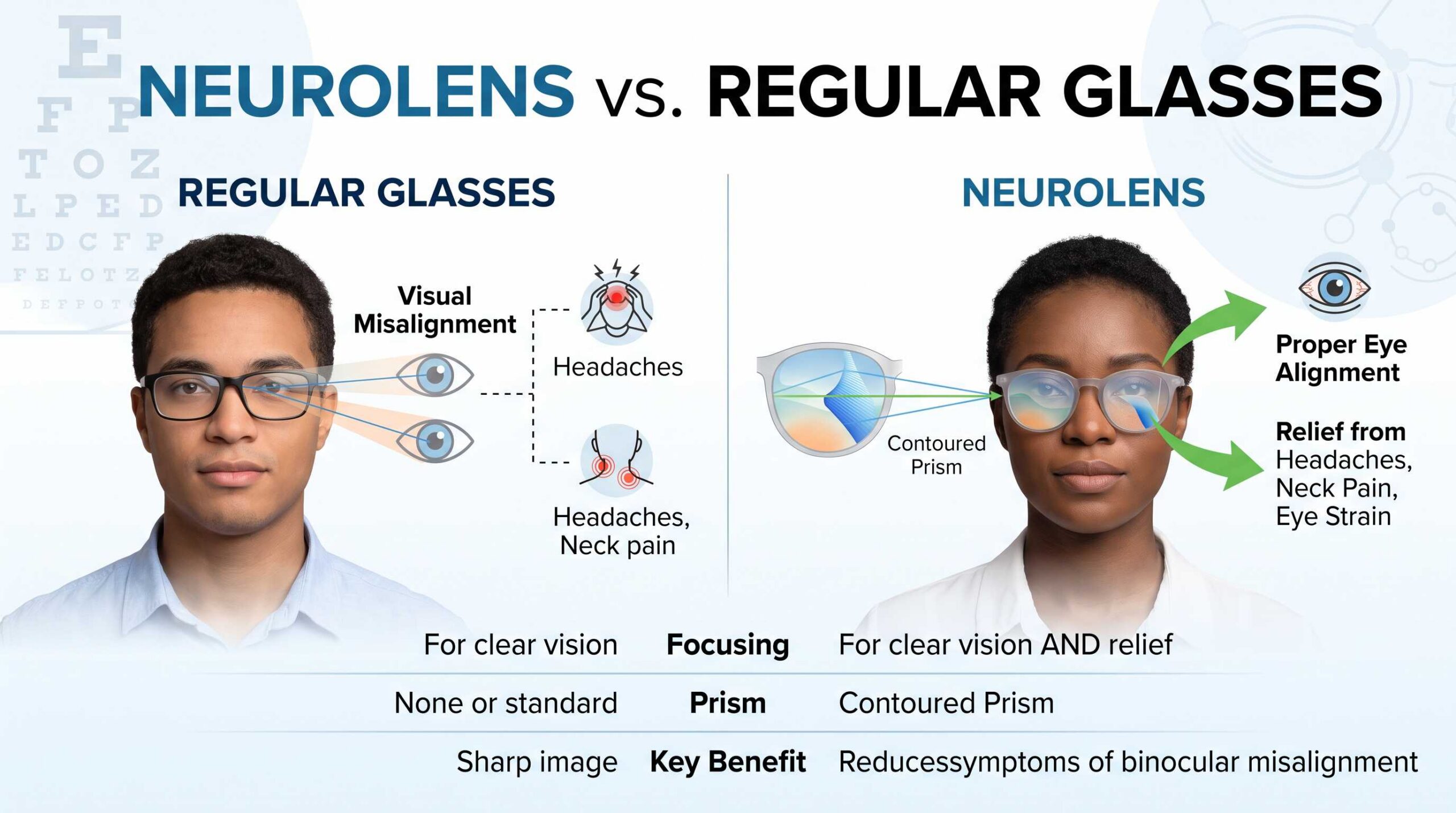
When comparing Neurolens vs. regular glasses, it’s important to understand that these lenses serve different purposes. Traditional eyeglasses are designed to correct refractive errors like nearsightedness, farsightedness, and astigmatism. Neurolens glasses, on the other hand, are designed to help address symptoms associated with eye misalignment and visual stress.
If you’re researching Neurolens vs. traditional lenses, this guide will help you understand the differences, how the technology works, who may benefit, and whether a Neurolens consultation may be right for you.
Understanding the Difference Between Neurolens and Regular Glasses
What Do Traditional Prescription Glasses Correct?
Traditional prescription glasses are designed to improve visual clarity. They correct common refractive errors, including:
- Nearsightedness (myopia)
- Farsightedness (hyperopia)
- Astigmatism
- Presbyopia
For many patients, traditional eyeglasses provide excellent vision correction and help them see clearly at distance, near, or both.
However, clear vision does not always mean comfortable vision.
Some people continue to experience headaches from screen time, eye fatigue, difficulty focusing, or discomfort after extended periods of reading or computer use, even when they have an up-to-date prescription.
What Makes Neurolens Different?
When discussing prescription glasses vs. Neurolens, the biggest difference is that Neurolens is designed to address visual alignment concerns that may contribute to discomfort.
Your eyes are meant to work together as a team. Even a small amount of eye misalignment can force the eye muscles to work harder to maintain focus, particularly during close-up activities such as reading, texting, or working on a computer.
Neurolens technology uses specialized prism technology to help align the eyes more comfortably. This may reduce the strain placed on the visual system and help relieve symptoms associated with prolonged near work.
Rather than simply improving visual clarity, Neurolens focuses on improving day-to-day comfort.
How Does Neurolens Technology Work?
Understanding Eye Misalignment Symptoms
Many people are surprised to learn that small eye alignment issues can contribute to symptoms they experience every day.
Common eye misalignment symptoms may include:
- Frequent headaches
- Eye strain from computer use
- Tired eyes from screens
- Dry eye sensations
- Difficulty concentrating while reading
- Neck and shoulder discomfort
- Fatigue during visual tasks
These symptoms often become more noticeable as screen time increases. Whether you’re working remotely, attending virtual meetings, managing emails, or spending time on your phone, digital devices place significant demands on your visual system.
What Are Contoured Prism Lenses?
Neurolens utilizes a unique technology known as contoured prism lenses.
Unlike traditional prism lenses that provide a fixed amount of correction throughout the lens, contoured prism technology gradually changes the amount of prism depending on where you’re looking through the lens.
This design allows the lenses to support comfortable eye alignment at both distance and near viewing ranges.
For patients experiencing visual discomfort, contoured prism lenses may help reduce the effort required for the eyes to work together throughout the day.
Because every patient’s visual system is unique, a personalized examination is necessary to determine whether prism lenses for eye strain may be beneficial.
Some patients researching binocular vision dysfunction glasses may discover Neurolens as a potential option for addressing symptoms associated with visual misalignment.
Symptoms That Regular Glasses May Not Fully Address
Headaches From Screen Time
Headaches are one of the most common complaints among adults who spend significant time using digital devices.
While many factors can contribute to headaches, visual stress caused by prolonged near work may play a role for some individuals.
If you frequently experience headaches from screen time despite wearing prescription glasses, it may be worth discussing additional testing with your eye doctor.
Eye Strain From Computer Use
Digital eye strain treatment has become increasingly important as screen usage continues to grow.
Many professionals spend eight or more hours each day working at a computer. This level of visual demand can place significant stress on the eyes and visual system.
Symptoms of eye strain from computer use often include:
- Blurry vision
- Burning or tired eyes
- Difficulty focusing
- Eye fatigue
- Reduced productivity
Traditional glasses may help improve visual clarity, but they may not address the underlying alignment issues contributing to discomfort.
Neck and Shoulder Discomfort
Many people don’t realize that visual stress can influence posture.
When your eyes are working harder than necessary to maintain focus, you may unconsciously adjust your head position or body posture to compensate. Over time, this can contribute to neck pain and eye strain, as well as shoulder discomfort.
For some patients, improving visual alignment may help reduce these symptoms and improve overall comfort during daily activities.
Who Is a Good Candidate for Neurolens?
Adults Who Spend Hours on Digital Devices
One of the most common groups who seek Neurolens consultations includes adults who spend much of their day looking at screens.
This may include:
- Office workers
- Remote employees
- Business professionals
- Students
- Gamers
- Frequent smartphone users
The more time you spend performing near-focused activities, the more important visual comfort becomes.
Patients Experiencing Persistent Symptoms Despite Wearing Glasses
Some patients assume that if they have an accurate prescription, their symptoms should disappear.
However, if you continue experiencing discomfort despite wearing glasses, there may be more to the story.
Patients often seek Neurolens after experiencing:
- Ongoing headaches
- Eye fatigue
- Difficulty concentrating
- Neck tension
- Discomfort during reading or computer work
When symptoms persist, additional testing can help identify whether visual alignment concerns may be contributing to the problem.
Individuals Looking for Digital Eye Strain Treatment
If you’re actively searching for digital eye strain treatment, Neurolens may be worth exploring.
While not every patient is a candidate, many people benefit from a detailed assessment that evaluates how their eyes work together during visual tasks.
A personalized examination can determine whether Neurolens glasses may be an appropriate solution for your needs.
Benefits of Neurolens Compared to Traditional Glasses
One of the most commonly discussed benefits of Neurolens is its ability to address symptoms that may persist even after receiving an updated glasses prescription.
Improved Visual Comfort Throughout the Day
One of the primary benefits of Neurolens is improved comfort during daily activities.
Many patients report feeling more comfortable while reading, working, and using digital devices after receiving lenses designed to support eye alignment.
Reduced Eye Fatigue During Screen Use
Digital devices aren’t going away anytime soon.
Whether you’re working, communicating, learning, or relaxing, your eyes are constantly being challenged by near-focused tasks.
Neurolens may help reduce the visual effort associated with prolonged screen use, helping some patients experience less fatigue throughout the day.
Potential Relief From Headaches and Neck Strain
Because eye alignment issues can contribute to visual stress, some patients experience improvements in symptoms such as:
- Headaches
- Eye strain
- Neck discomfort
- Shoulder tension
Results vary from person to person, which is why proper testing and evaluation are essential.
Personalized Vision Solutions
Another advantage of Neurolens is its individualized approach.
Rather than offering a one-size-fits-all solution, the lenses are prescribed based on precise measurements of your visual alignment and visual demands.
This allows your eye doctor to create a solution tailored to your specific needs.
How to Know Whether Neurolens Is Right for You
What Happens During a Neurolens Consultation?
A Neurolens consultation often begins with a comprehensive eye exam and a detailed evaluation of your vision and symptoms.
Your doctor will discuss:
- Your daily visual demands
- Computer usage habits
- Headaches and eye strain symptoms
- Previous eyewear history
- Overall visual comfort
Additional testing may be performed to evaluate eye alignment and determine whether Neurolens technology may be beneficial.
Advanced Testing and Personalized Recommendations
Using advanced diagnostic technology, eye doctors can identify eye alignment issues that may not be detected during a standard eye exam.
By gathering detailed information about your visual system, your doctor can determine whether Neurolens is appropriate and recommend the best course of action.
Questions to Ask Your Eye Doctor
If you’re considering Neurolens, some helpful questions include:
- Could eye misalignment be contributing to my symptoms?
- Would Neurolens help with my headaches or eye strain?
- How does Neurolens compare to traditional eyeglasses?
- Am I a candidate for prism lens technology?
- What results can I realistically expect?
These conversations can help you make an informed decision about your vision care.
Neurolens in Orange County: Finding the Right Solution for Your Symptoms
For many adults throughout Orange County, long hours spent on computers, tablets, and smartphones have become a normal part of everyday life.
Patients searching for an eye doctor in Laguna Hills or Mission Viejo can benefit from a personalized evaluation to determine whether Neurolens may help address their symptoms.
As screen time increases, symptoms such as headaches, tired eyes, and neck discomfort have become more common. While traditional glasses remain an excellent solution for correcting refractive errors, some patients require additional support to achieve lasting visual comfort.
If you’re searching for a Neurolens provider in Orange County, a personalized vision assessment can help determine whether this technology may be appropriate for your needs.
Patients seeking eye strain treatment in Orange County often discover that visual alignment issues may be contributing to their discomfort.
At La Paz Optometric, our team takes a personalized approach to vision care. By combining advanced diagnostic technology with individualized recommendations, we help patients better understand the cause of their symptoms and explore solutions that support comfortable vision.
Frequently Asked Questions About Neurolens
Is Neurolens the Same as Regular Prescription Glasses?
No. Traditional glasses primarily correct refractive errors such as nearsightedness, farsightedness, and astigmatism. Neurolens incorporates specialized prism technology designed to help address eye alignment-related symptoms.
Can Neurolens Help With Headaches and Eye Strain?
Many patients seek Neurolens because of headaches, eye strain, and visual fatigue. A comprehensive evaluation can determine whether eye alignment issues may be contributing to these symptoms and whether Neurolens may be appropriate.
How Do I Know If I Have Eye Misalignment Symptoms?
Common symptoms include headaches, eye fatigue, neck discomfort, tired eyes, difficulty focusing, and discomfort during prolonged computer use. An eye examination can help determine whether eye misalignment may be involved.
Are Neurolens Lenses Only for Computer Users?
No. While many patients who use digital devices benefit from Neurolens, the technology may also help individuals who experience symptoms during reading, driving, or other visual activities.
Where Can I Schedule a Neurolens Consultation in Orange County?
If you’re experiencing persistent headaches, eye strain, or visual discomfort, scheduling a Neurolens consultation with an experienced eye care professional can help determine whether this technology may be right for you.
Ready to Find Out Whether Neurolens Is Right for You?
When comparing Neurolens vs. regular glasses, it’s important to remember that these lenses are designed to address different aspects of vision.
Traditional glasses help you see clearly by correcting refractive errors. Neurolens goes a step further by addressing eye alignment-related visual stress that may contribute to headaches, eye fatigue, and discomfort.
If you continue to experience headaches, eye strain, or visual discomfort despite wearing prescription glasses, schedule an appointment with the team at La Paz Optometric. A personalized evaluation can help determine whether Neurolens may be the right solution for your visual needs.